
Writing workshop is a powerful form of writing instruction, one that works whether you’re weaving it into an existing core program or using it as your primary model. Workshop invites students to see themselves as writers from the very start. It nurtures identity, builds confidence, and helps learners develop the independence they need to grow over time.
8 Essential Strategies for Getting Started with Writing Workshop
1. Start Small and Grow Over Time
Begin with one unit and focus on establishing consistent routines before adding additional layers of craft instruction. A strong foundation, built through predictable structures, will make later units smoother and more impactful.
Preparing for workshop shouldn’t be a one-time task. It’s an ongoing process of reflection, adjustment, and growth. As you refine your practices and learn more about your writers, you’ll discover new ways to make workshop meaningful, sustainable, and energizing for both you and your students.
2. Sequence Writing Units with Purpose
Thoughtful sequencing helps students build skills over time. Narrative units are a great starting point because personal stories are familiar, engaging, and accessible for most writers. As students gain confidence with routines and craft moves, you can transition to informational and opinion writing, where they’ll apply their growing skills to new purposes and audiences.
If your class is new to workshop, you could borrow units from earlier-grade units to reinforce foundational skills such as spelling, handwriting, and sentence structure. Developing these skills helps students feel capable and supported as they take on more complex writing tasks.
3. Build Predictable, Supportive Routines
Predictable routines give students the stability they need to succeed. Visual schedules, smooth transitions, and clearly communicated expectations help students understand what’s coming next and how to move through writing time with confidence.
Writing workshop typically consist of three components:
- Minilesson (10 minutes): Teachers introduce a strategy or concept.
- Work Time (35-45 minutes): Students write independently and receive differentiated support through individual writing conferences and small groups.
- Share Time (3-5 minutes): Students share their work, celebrate progress, and learn from one another.
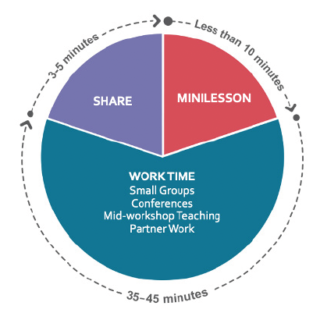
Over time, these routines free up cognitive space so student can focus less on what to do and more on what they want to say. When students know what each part of the workshop looks like, and what is expected of them, they settle into routines more smoothly.
4. Set Up a Classroom That Invites Writing
Creating a writing-friendly space begins with making materials easy to access. Stock your room with paper, notebooks, pens, and any other tools students may need, and keep them within reach so writers can gather supplies quickly. The writer’s notebook can be an especially important tool. This is where writers generate ideas, rehearse, draft, revise, and reflect across genres. More than simply a place to write, the notebook makes students’ thinking visible, supports independence and volume, and gives teachers the insight they need for responsive conferences and small-group instruction.
Post anchor charts that outline the writing process, along with genre-specific reminders or craft moves students can refer to as they work. Offer mentor texts that help students see what good writing can look like. When these resources are visible and available, students gain confidence in navigating the writing process on their own.
5. Build Writing Stamina and Confidence
When students walk into a classroom where their ideas matter, they begin to see themselves not just as learners practicing writing, but as writers with something worth saying. That shift in mindset shapes how they approach every draft and workshop that follows.
One of the simplest ways to set them up for success is by building stamina gradually. Short, low-stakes writing bursts help students ease into workshop and develop the endurance they’ll need for longer writing sessions. These early experiences show students that writing is doable, even when getting started feels big.
6. Celebrate the Writing Process
One of the most effective ways to encourage students is by celebrating the writing process. You should try to normalize imperfection from the start. Writing workshop is about expressing ideas and discovering meaning. When students learn that writing can be messy, expressive, and personal, they will feel free to explore and take more creative risks.
When you are modeling your own writing process, it’s important to let your students see the imperfections. By watching you draft, revise, and cross things out, and try again, students see firsthand that writing is messy for everyone. It also allows students to see how writers plan, rethink, and refine ideas. This transparency removes pressure and shows that struggle, experimentation, and revision are natural parts of the process.
7. Feedback that Builds Community
Thoughtful feedback is at the heart of a success writing workshop. When student learn how to give and receive feedback with kindness and clarity, they grow as members of a supportive classroom community. Teaching this skill begins with modeling what helpful feedback looks and sounds like.
Scaffolding can help with this, especially early on. Provide simple, reliable sentence stems such as:
- “I notice…”
- “I’m curious about...”
- “Next time, you might…”
These structures help students focus on craft rather than criticism, making feedback actionable and encouraging deeper collaboration. Over time, these conversations will become a natural part of workshop. When students feel safe sharing their work and know that peers will respond with respect, they are more likely to take creative risks and try new strategies.
8. Differentiate Through Purposeful Conferences and Small Groups
Purposeful conferences are one of the best ways to differentiate instruction during your writing workshop. One-on-one conversations provide a window into each writer’s process and needs.
Here are a few questions you can add to your toolkit:
- What strategy are you trying today?
- What part of your writing are you feeling most confident about?
- Is there a spot where you want help thinking through your next move?
- How did your last revision change your piece?
Small-group conferences offer targeted support for writers with similar goals and create an ideal setting for peer feedback that builds collaboration.
Take the First Step into the Writing Workshop
Taking the first step into writing workshop opens the door to a more authentic experience for both you and your students. Remember that the writing workshop is a journey. Each unit, conversation, and shared moment adds to your understanding of what your writers need and how best to support them.
If you’re ready to take the next step, our free ebook is the perfect place to start. Inside you’ll find research-based insights to help you understand and implement the workshop model with confidence.
Download the ebook now and discover how to turn writing instruction into an experience that inspires every student.
***
Explore Units of Study in Writing for Grades K–5 to learn how you can build stronger writers.
Get your free copy of the ebook and start transforming your writing instruction today.