
Imagine writing instruction where students learn to see themselves as writers with unique voices and ideas worth sharing. That’s the promise of the workshop model, a proven framework that gives students dedicated time and support to engage in authentic reading and writing.
The workshop model is grounded in student agency, daily practice, and responsive feedback. It empowers learners to take ownership of their craft while positioning teachers as mentors and guides.
What Is the Writing Workshop?
The writing workshop is a student-centered instructional framework that combines explicit teaching with opportunities for choice and independent practice. It creates a classroom environment that embraces the writing process. Students learn to plan, draft, revise, and publish their work while receiving guidance and feedback along the way.
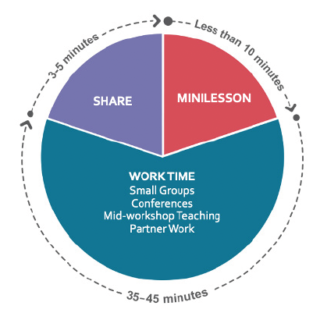
A typical workshop includes three key components:
- Minilesson: A short, focused teaching point that introduces a strategy or new concepts.
- Work Time: This is longest part of the writing workshop, where students write independently, applying what they’ve learned, exploring ideas, and building writing stamina. Teachers can provide differentiated instruction through conferring and flexible small groups.
- Share Time: Opportunities for students to share their work, celebrate progress, and learn from one another.
This approach empowers students to see themselves as part of a community of writers. It’s not just about producing a final piece but about building confidence, creativity, and skill through authentic practice.
Why the Workshop Model Works
The workshop model succeeds because it encourages students to see themselves as writers. At its core, this approach priorities consistent, purposeful writing, giving students the time and space to develop essential skills through authentic practice.
Here’s why it matters:
- Fluency and Elaboration Comes Through Practice: Just as fluency matters for reading, volume matters for writing. Daily writing practice helps students develop clarity, depth, and insight as they build stamina.
- Confidence and Stamina Grow Over Time: Writing regularly helps students build endurance and self-assurance. They learn that writing is not a one-time event but an ongoing craft they can master.
- Discover and Develop a Unique Voice: The more students write, the more they will refine their own voice, turning writing into a process of authentic self-expression rather than a formulaic exercise.
- Responsive Feedback Accelerates Growth: Through conferences, peer feedback, and reflective sharing, students receive timely personalized guidance. This coaching approach ensures instruction meets individual needs.
- Flexible Structure Supports Teachers: With its predictable components (minilesson, work time, and share time) the model balances explicit instruction with independence. It works alongside core ELA programs and can be tailored to meet the unique needs of each classroom, while making it easy for teachers to align lessons to standards.
The History of the Workshop Model
The workshop model is rooted in decades of research and classroom practice. During the 1966 Dartmouth Seminar, a landmark conference that reimagined how English should be taught, educators challenged grammar-driven instruction, instead advocating for writing to be seen as a form of discovery and self-expression.
In the late 1970s and early 1980s, Donald Graves and Donald Murray reshaped writing instruction by studying how children learn to write. Their work revealed something simple yet transformative: students flourish when they have choice, time, and response. Graves’ landmark book, Writing: Teachers & Children at Work, showed that when young writers select their own topics, write daily, and receive meaningful feedback, they engage deeply in the writing process. This approach shifted instruction toward authentic writing.
The workshop model builds on these principles. For learners, writing becomes a process of discovery rather than a product to submit. For educators, it’s a flexible framework that works with any curriculum, making it easier to meet diverse needs. It blends direct instruction with independence, giving teachers space to guide while encouraging students to take ownership of their writing choices.
Turning Classrooms into Communities of Writers
One of the most compelling aspects of the workshop model is the sense of belonging it creates. Classrooms become collaborative spaces where students take risks, share ideas, and learn from one another. Peer feedback and teacher conferences aren’t just instructional tools; they’re opportunities to build trust and celebrate growth.
If you’re ready to bring this dynamic, student-centered approach to your classroom, our free ebook is the perfect place to start. Inside you’ll find research-based insights to help you understand and implement the workshop model with confidence.
Download the ebook now and discover how to turn writing instruction into an experience that inspires every student.
***
Learn more about the Units of Study in Writing for Grades K–5 to help students develop strong writing skills.
Get your free copy of the ebook and start transforming your writing instruction today.