by Stacy Simonyi and Tania Campanelli. Authors of Positive Classroom Communities.
Self-awareness, simply put, is an understanding of oneself. This includes understanding your personal motivations, how emotions present in your body as feelings (and recognizing that this is different from how they present for others), and identifying your values. Students who are self-aware can identify their personal strengths and opportunities to learn and grow. Self-awareness skills can be broken down into the following areas:
- Emotional literacy,
- Identifying strengths of self,
- Identity,
- Growth mindset, and
- Self-efficacy.
These intrapersonal skills are part of students’ emotional development and become assets towards healthy growth as children become adolescents and grow into adulthood. Self-awareness skills are essential to building interpersonal skills, the skills we use when communicating, playing, and working with others. Once we have this awareness, we will be more aware of others and better equipped to begin developing a connected, compassionate classroom and a positive community.
What does Self-Awareness Look Like in Elementary Classrooms?
In upper elementary grades, this might look like a student recognizing they are struggling with multiplication facts and also recognizing a strength in collaboration with others. Given the chance, the student decides to complete a math review packet with a group. They get the support they need with math while helping the group.
Another way this might be seen in an elementary classroom is in a student who identifies that they have good comprehension skills and are also aware that they easily get distracted by their peers. The student might decide to sit at the teacher’s desk or somewhere away from their friends to work on an assignment.
Students who are self-aware also understand who they are as individuals within their families, classrooms, and the world. In early elementary, we might see a student with a younger sibling realize they are a role model for someone else. The student brings this part of their identity into the classroom when interacting with their peers. Self-awareness helps students be their authentic selves, which allows them to make more meaningful connections with others, creating a sense of safety and belonging, which is a crucial aspect to being available and open to learn.
What does Self-Awareness Look Like for Educators?
As educators, we can teach self-awareness, but to help students truly understand these skills, we must first practice self-awareness ourselves. Just as we need to know our content area, we also need to know how to be self-aware. This awareness starts from reflecting on questions such as: What are my values? What are my strengths? How do I approach challenges?
Self-awareness requires ongoing reflection. Self-awareness is not meant to be a skill that is acquired once and then never reflected upon again. As we grow and enter new phases in our lives, it is vital to keep returning to questions that elicit reflection: How and why have my values changed? What has helped me develop my strengths? How have my challenges shaped the person I am today? This isn't easy for any of us! The more stressed we become, the more difficult it is to slow down and reflect. the more stressed we become, the more we are at risk of losing our self-awareness skills. It is especially difficult in a job that requires so much.
Hopefully, if your administrators have been like ours, they have attempted to respond to the heightened stress educators have been experiencing by including self-care topics within staff meetings or professional development sessions. But self-care and self-awareness are not synonymous. Self-care is the practice of taking action to maintain or improve your physical and mental health. Some common self-care routines might include stopping for a latte on the way to work, going to happy hour with coworkers at the end of the week, binge-watching a show on the weekend, taking a yoga or painting class, etc. All of these are wonderful! However, we want to avoid using these activities as temporary band-aid fixes that focus on momentary self-soothing. Self-soothing activities don’t help us develop the self-awareness necessary for true, soul-warming self-care, unless we combine them with self-awareness practices.
Self-care, viewed through a lens of self-awareness, is about creating a consistent practice that brings joy while also allowing time to pause and reflect. Ideally, this means finding a balance between activities that make our bodies and minds feel good, and activities that allow us to reflect on who we are and how we interact with the world.
For example, when Tania goes for a run, it’s just about enjoying the music and moving her body; this is not the time she uses to reflect. But when she takes a painting class, she is consciously practicing a growth mindset and challenging herself by trying a new hobby. Stacy reads Middle Grade and Young Adult books as a way to escape into a different world, but this doesn’t allow her time to reflect. Her self-awareness practice comes from getting a coffee at her favorite coffee shop and consciously taking the time to calm her mind and visualize how she’d like to interact with the world today.
Self-Awareness Practices
Here are some ways to practice self-awareness this month:
For Students:
- Start each day with a check-in by asking students to share how they are feeling, a strength they have, or something they are interested in. This small reset will help students become more centered and ready to start the day as these practices help students feel more connected to themselves as well as to their peers.
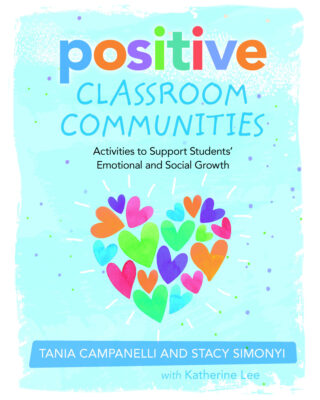
- Our book Positive Classroom Communities includes in-depth activities (such as the Feelings Dictionary, Safe Space Discussion, and Index Card Tower activities) and suggestions for general practices to support students’ developing self-awareness, focusing on skills that can be observed by teachers in the classroom.
For Educators:
- Identify self-care activities you do that provide momentary comfort during stressful times. How could you pair one of those activities with reflecting on one or more questions we shared above?
When we use the lens of these self-awareness skills as we observe and interact with our students, we gain a deeper understanding of how to support each individual and the class community as a whole.